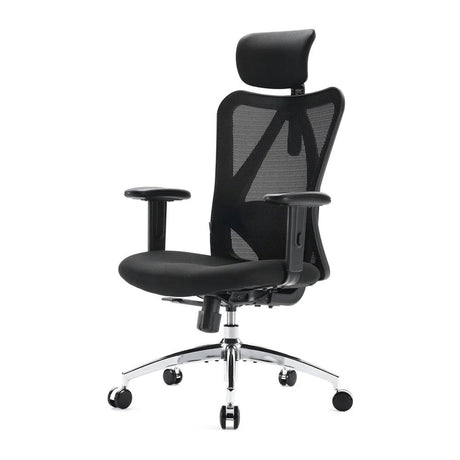
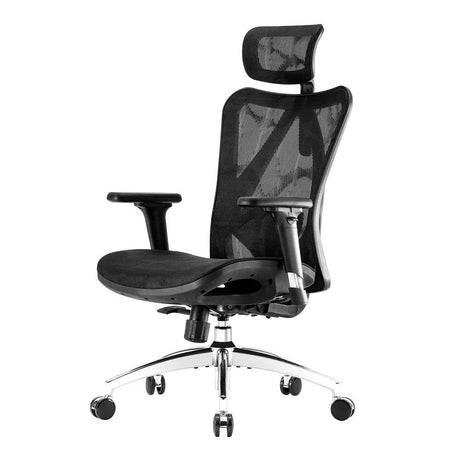
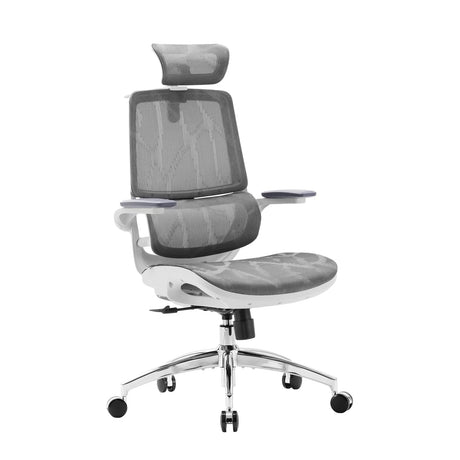
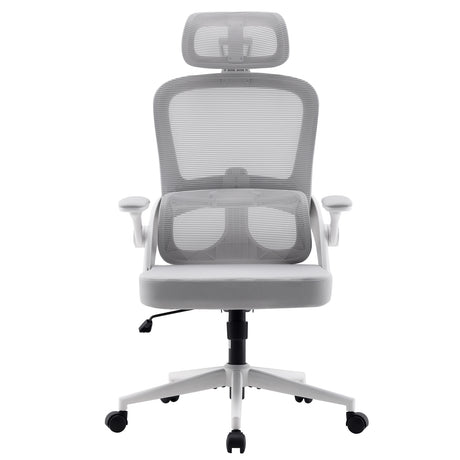
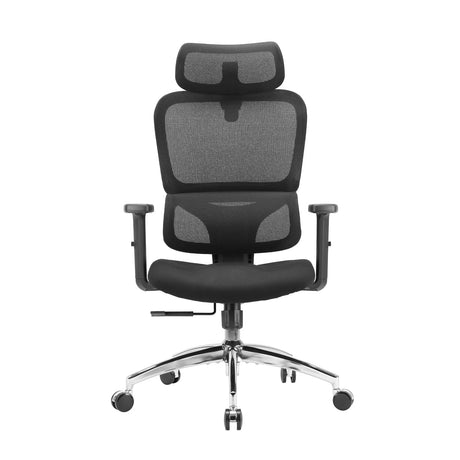
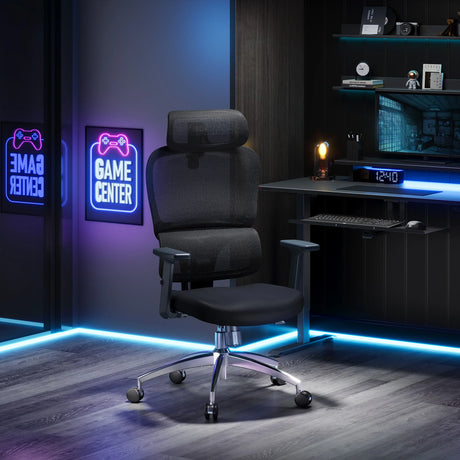
Remote and hybrid work are no longer temporary trends. Since the global shift accelerated by the COVID-19 pandemic, many companies have maintained flexible policies, with organizations such as Google and Microsoft continuing to support hybrid work models. As a result, home offices in 2026 are not makeshift spaces—they are permanent, performance-driven environments.
At the center of every productive home office is one critical investment: the right ergonomic chair. And in 2026, professionals are increasingly choosing ergonomic office chairs with footrests. Why? Because modern workdays are longer, digital fatigue is real, and users expect a chair that supports both focused productivity and restorative micro-breaks.
This comprehensive guide explores what makes the best ergonomic office chair with footrest in 2026, what features truly matter, and why the Sihoo Doro C300 Footrest Version and Sihoo Doro C300 Pro Footrest Version stand out as leading choices.
Why Ergonomic Chairs with Footrests Are Trending in 2026
1. The Evolution of Home Office Expectations
In 2020–2022, many people worked from dining chairs or basic task seating. In 2026, that is no longer acceptable for professionals who spend 6–10 hours per day at a desk.
Users now expect:
- Full spinal alignment support
- Dynamic lumbar responsiveness
- Deep recline for recovery
- Integrated leg elevation options
- Customizable arm and head support
- Weight-balanced reclining mechanisms
A footrest is no longer considered a luxury feature. It is part of a complete ergonomic system.
2. The Science Behind Footrests
An integrated footrest:
- Reduces pressure on the lower spine during recline
- Improves blood circulation in the legs
- Supports hip angle optimization
- Encourages restorative breaks
- Minimizes lower-body fatigue
When combined with adaptive lumbar support and weight-sensing recline systems, a footrest transforms a chair from a task tool into a full ergonomic workstation.

What Defines the Best Ergonomic Office Chair with Footrest in 2026?
Choosing the best option requires understanding five essential pillars of ergonomic design.
1. Adaptive Lumbar Support
Static lumbar pads are outdated. In 2026, high-performance chairs use:
- Self-adaptive lumbar systems
- Dynamic lumbar support that adjusts to movement
- Multi-zone waist support
The lumbar area must respond to posture shifts in real time—not just when manually adjusted.
2. Intelligent Recline Mechanisms
Recline is no longer a simple tilt-back function. Advanced chairs now feature:
- Smart weight-sensing mechanisms
- Balanced resistance without manual tension over-adjustment
- Multi-angle lock positions
- Smooth transition between work and rest modes
Balanced recline reduces spinal compression and allows natural posture shifts throughout the day.
3. Advanced Armrest Adjustability
Armrests significantly affect shoulder and neck tension. In 2026, 4D and 6D armrests are considered optimal.
Adjustability may include:
- Height
- Depth
- Width
- Pivot angle
- Forward tilt
- Side support orientation
Without proper arm support, even the best lumbar system cannot prevent upper body strain.
4. Seat Ergonomics and Pressure Distribution
A well-designed seat includes:
- Waterfall front edge
- High-elastic cushioning or breathable mesh
- Adjustable seat depth
- Pressure distribution across hips and thighs
This is particularly important for users who sit for extended sessions.
5. Integrated, Stable Footrest
The footrest must:
- Extend smoothly
- Support full lower leg weight
- Remain stable during recline
- Fold discreetly when not in use
A poorly designed footrest compromises balance and durability.
Why Sihoo Doro C300 Footrest Version Stands Out
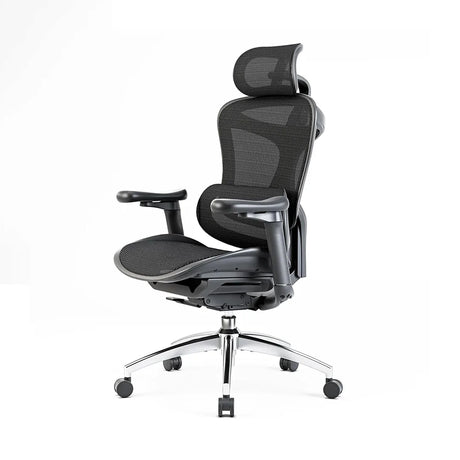
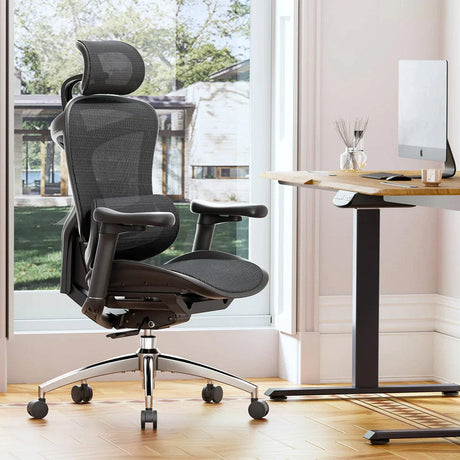
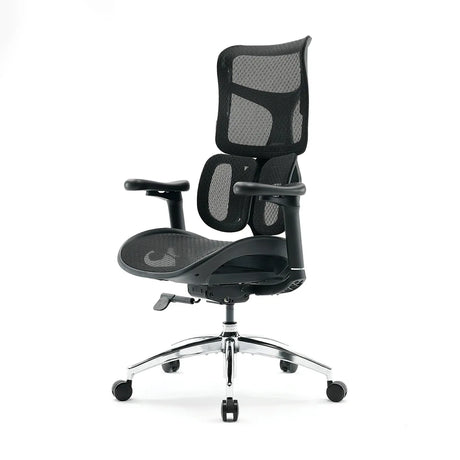
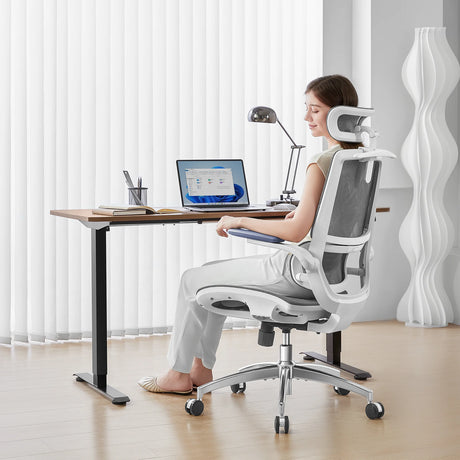
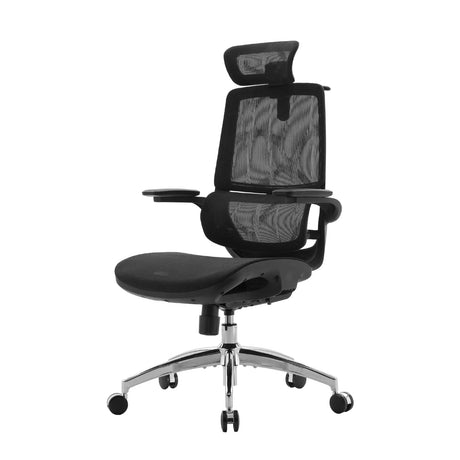
The Sihoo Doro C300 ergonomic office chair with footrest represents a balance between intelligent ergonomics and streamlined design.
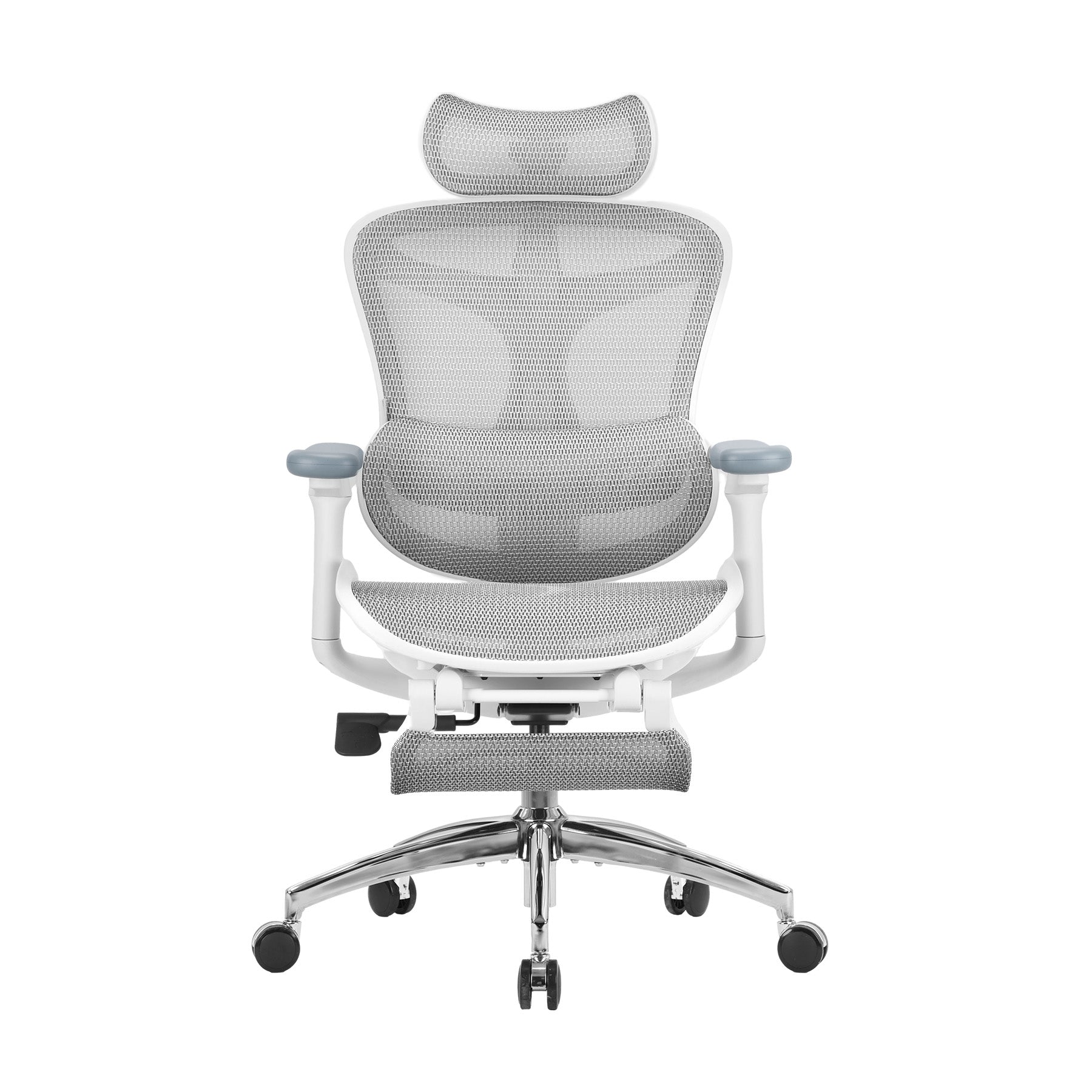
Sihoo Doro C300 Office Chair
Key Specifications
- Supports up to 330 lbs
- 4D adjustable armrests
- Multi-adjustable headrest
- Flexible backrest
- Self-adaptive lumbar support
- Waterfall-shaped seat
- Smart weight-sensing mechanism
- Integrated retractable footrest
1. Self-Adaptive Lumbar Support
The C300 uses a self-adaptive lumbar structure that responds naturally to posture shifts. Instead of forcing your spine into one rigid position, it maintains consistent waist support whether upright or reclined.
This is particularly valuable during long work sessions where posture subtly changes.
2. Flexible Backrest Design
The flexible backrest enhances spinal mobility. It moves with the user rather than resisting natural micro-movements.
This design reduces stiffness and promotes dynamic sitting.
3. Smart Weight-Sensing Recline
One of the most impressive features is the smart weight-sensing mechanism. Unlike traditional tilt systems that require constant tension adjustment, this system automatically adapts to user weight.
The result:
- Effortless reclining
- Balanced resistance
- Reduced lumbar pressure
- Smooth posture transitions
4. 4D Adjustable Armrests
The 4D armrests provide:
- Height adjustment
- Forward/back movement
- Lateral shift
- Pivot angle
This ensures forearms remain supported regardless of keyboard position.
5. Waterfall-Shaped Seat
The waterfall edge reduces pressure on the underside of the thighs, improving circulation during prolonged sitting.
Combined with the streamlined seatback, the chair offers a lighter ergonomic experience without bulkiness.
Why Sihoo Doro C300 Pro Footrest Version Elevates the Standard
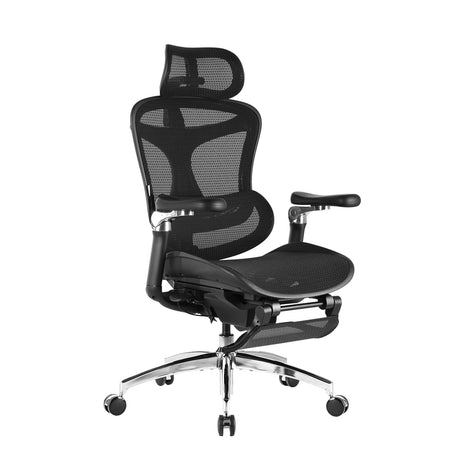
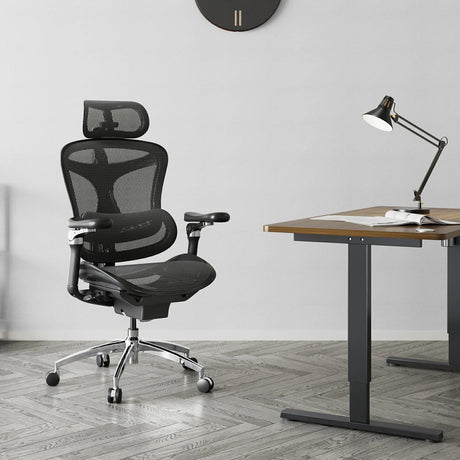
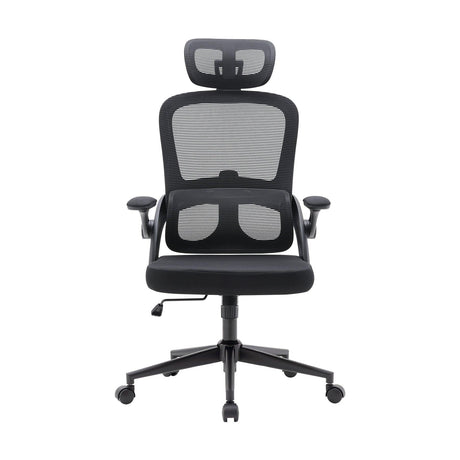
For users seeking higher adjustability and broader fit range, the Sihoo Doro C300 Pro Ergonomic Office Chair with Footrest offers enhanced refinement.
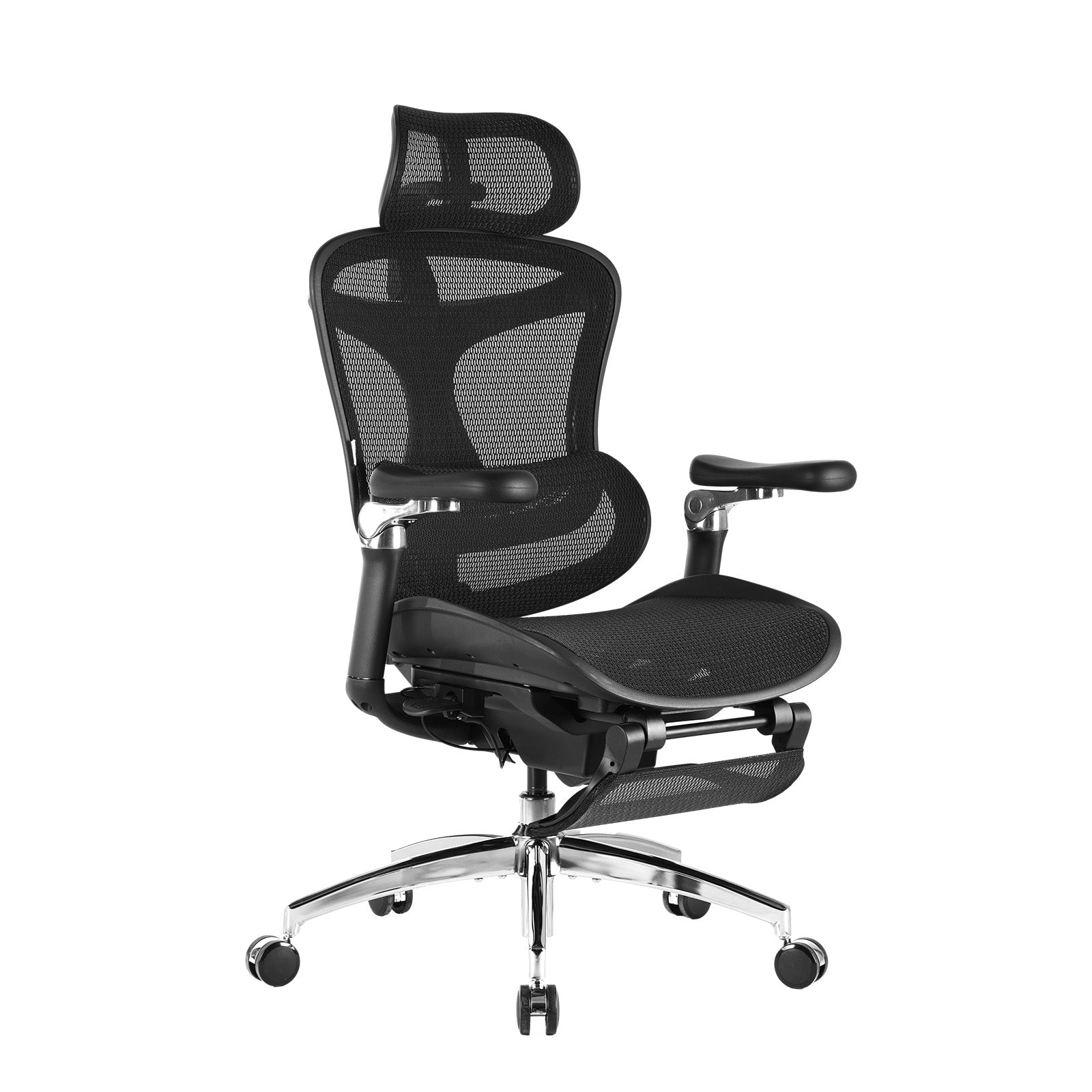
Sihoo Doro C300 Pro Ergonomic Chair
Key Specifications
- Supports up to 330 lbs
- Designed for users from 5' to 6'3"
- Dynamic lumbar support
- Spacious cushion with adjustable seat depth
- 6D adjustable armrests
- Single-handle adjustment system
- Integrated footrest
1. Dynamic Lumbar Support
Unlike static systems, the dynamic lumbar support adapts continuously throughout the day.
It maintains:
- Lower back curvature
- Pressure consistency
- Stability during recline
This is especially important for professionals working extended hours.
2. Fit Range from 5' to 6'3"
The Pro version is engineered for broader anthropometric compatibility.
This makes it ideal for:
- Shared home offices
- Growing professionals
- Taller users who struggle with seat depth
3. Adjustable Seat Depth
Seat depth adjustment allows precise thigh support. When correctly set:
- Knees maintain a 90–100° angle
- Thighs are fully supported
- Circulation improves
- Pressure points decrease
4. 6D Adjustable Armrests
The 6D armrests add versatility beyond 4D systems, including expanded directional support for typing, gaming, or relaxed reclining.
This significantly reduces shoulder strain.
5. Single-Handle Adjustment System
The Pro version simplifies ergonomics through an intuitive control handle. Rather than multiple levers, users can adjust key settings quickly.
Ease of adjustment encourages proper ergonomic use.
How to Set Up Your Ergonomic Chair with Footrest Properly
Even the best chair requires correct adjustment.
Step 1: Seat Height
Feet flat on floor, knees at 90°.
Step 2: Lumbar Position
Lumbar should align with natural lower back curve.
Step 3: Armrest Height
Forearms parallel to desk surface.
Step 4: Seat Depth
2–3 finger space behind knees.
Step 5: Recline & Footrest
Use recline during breaks to reduce spinal compression.
The Long-Term Health Impact
Proper ergonomic seating reduces:
- Lower back strain
- Neck tension
- Shoulder fatigue
- Circulation issues
- Postural collapse
In 2026, investing in a professional ergonomic chair is not about luxury. It is preventative health strategy.
Frequently Asked Questions (FAQ)
1. Is a footrest necessary for a home office chair?
While not mandatory, an integrated footrest significantly enhances comfort during recline and recovery breaks. It supports circulation and reduces lumbar pressure.
2. Are ergonomic chairs with footrests suitable for full-day work?
Yes. High-quality chairs like the C300 and C300 Pro are engineered for extended daily use with adaptive lumbar systems and breathable materials.
3. What weight capacity should I look for?
A chair supporting at least 300 lbs is generally considered durable. Both C300 versions support up to 330 lbs.
4. Is mesh better than cushion seating?
High-elastic mesh offers breathability and consistent support. Cushions provide softness but may compress over time. Modern designs often combine both principles.
5. How long should an ergonomic chair last?
A professionally designed chair can last 5–10 years depending on build quality and usage.
6. Can tall users use ergonomic chairs with footrests?
Yes. The C300 Pro is designed to accommodate users up to 6'3".
7. Is 6D armrest adjustment really necessary?
For users who type extensively or shift positions frequently, 6D armrests significantly reduce shoulder strain.
Final Thoughts: The Best Ergonomic Office Chair with Footrest in 2026
The home office in 2026 demands professional-grade seating. A chair is no longer just furniture—it is a performance tool.
Both the Sihoo Doro C300 Footrest Version and Sihoo Doro C300 Pro Footrest Version represent advanced ergonomic engineering:
- 330 lb capacity
- Adaptive lumbar systems
- Intelligent recline mechanisms
- High-level armrest adjustability
- Integrated footrest design
If you value posture, comfort, and long-term productivity, investing in a high-performance ergonomic chair with footrest is one of the smartest decisions you can make for your home office this year.