Bad posture has quietly become one of the most common health complaints in modern work culture. Long hours at a desk, hybrid schedules, gaming sessions, and mobile device use have all contributed to rounded shoulders, forward head posture, and persistent lower back discomfort.
But can an ergonomic office chair actually fix bad posture—or is it just another marketing promise?
This article takes a professional, evidence-informed look at posture mechanics, ergonomics, workplace design, and behavior change. We’ll explore what an ergonomic chair can realistically improve, what it cannot do alone, and how to build a posture-supportive environment that works long-term.
Understanding Bad Posture: What’s Really Happening?
Before discussing solutions, we need to clarify what “bad posture” actually means.
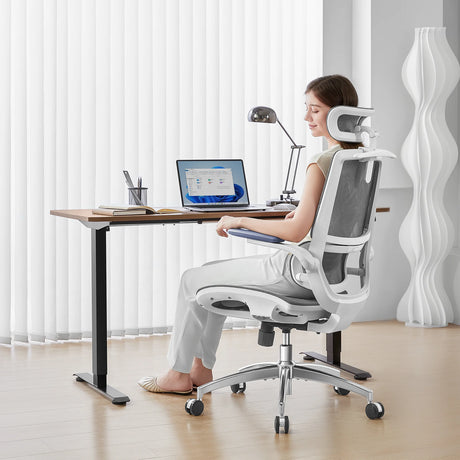
Posture refers to the alignment of your body segments—head, spine, pelvis, and limbs—relative to gravity. In a neutral seated posture:
- The ears align over the shoulders
- The shoulders align over the hips
- The spine maintains its natural curves
- The pelvis remains neutral (not excessively tilted)
- Feet are flat on the floor
Common postural deviations include:
-
Forward head posture
-
Rounded shoulders (kyphotic posture)
-
Posterior pelvic tilt (slouched sitting)
- Excessive lumbar flattening
These patterns develop over time due to muscular imbalance, sustained static positions, poorly adjusted furniture, and habit.
Posture problems are not just aesthetic concerns. They are associated with:
- Neck strain
- Lower back discomfort
- Shoulder tension
- Reduced breathing efficiency
- Fatigue
- Reduced productivity
The question becomes: where does an ergonomic chair fit into this equation?

What Is an Ergonomic Office Chair?
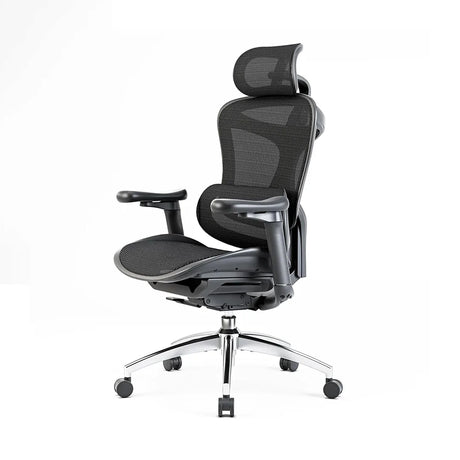
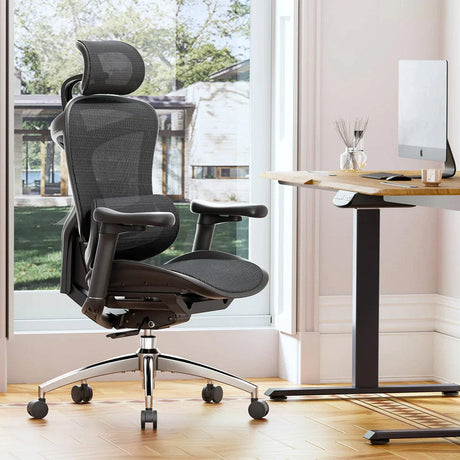
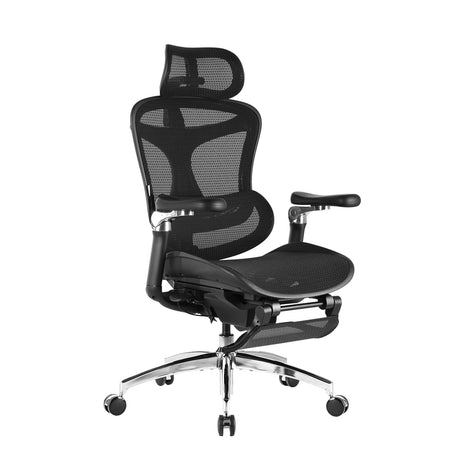
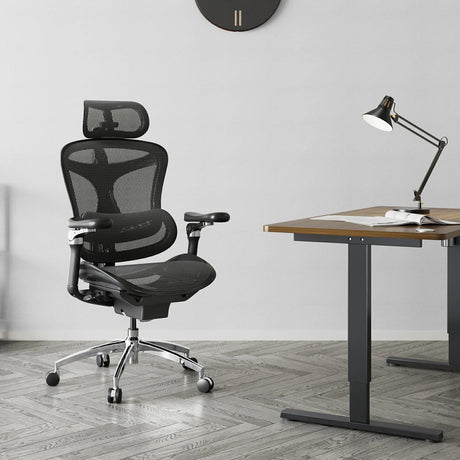
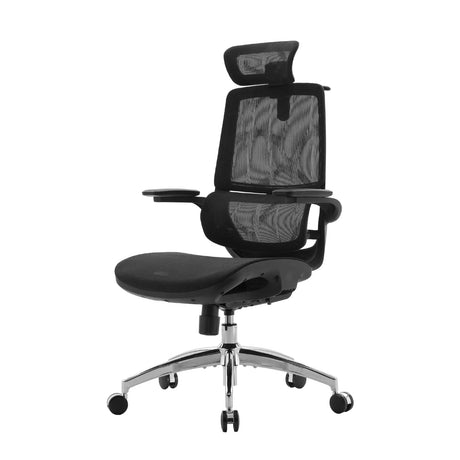
An ergonomic office chair is designed to support the natural alignment of the body while seated for extended periods. Unlike basic task chairs, ergonomic chairs typically include:
- Adjustable lumbar support
- Seat height adjustment
- Seat depth adjustment
- Recline tension and tilt lock
- Adjustable armrests (2D, 3D, or 4D)
- Adjustable headrest (in some models)
The goal is not to “force” posture, but to reduce strain by aligning the chair with the user’s body dimensions.
The Science Behind Seated Posture
Research in occupational ergonomics consistently shows that prolonged static sitting increases spinal disc pressure, especially when slouching.
When you sit:
- Lumbar disc pressure increases compared to standing
- A slouched posture increases posterior disc loading
- Neck flexion increases cervical spine stress
Proper lumbar support helps maintain the spine’s natural lordotic curve, reducing strain on ligaments and discs.
However, modern ergonomic research has shifted from promoting “perfect posture” to promoting movement variability. The human body is not designed to stay fixed in one position—even a “good” one—for hours.
This distinction is crucial when evaluating whether a chair can fix posture.
Can an Ergonomic Chair Fix Bad Posture?
Short Answer:
An ergonomic chair can support better posture—but it cannot permanently fix bad posture on its own.
Let’s break this down.
What an Ergonomic Chair Can Do
1. Support Neutral Spinal Alignment
Adjustable lumbar support helps maintain the natural inward curve of the lower back. When properly positioned:
- The pelvis remains neutral
- The lumbar spine avoids collapse
- Slouching becomes less likely
This reduces mechanical stress and helps the body adopt healthier alignment patterns during work.
2. Reduce Forward Head Posture
If a chair has:
- Proper seat height
- Correct recline angle
- Adjustable headrest
It can reduce the tendency to lean forward excessively—especially when paired with proper monitor height.
However, forward head posture is often more related to screen positioning than the chair itself.
3. Encourage Dynamic Sitting
Many high-quality ergonomic chairs feature:
- Synchro-tilt mechanisms
- Tension-adjustable recline
- Micro-movement support
These features allow subtle movement while seated, which improves circulation and reduces static muscle fatigue.
Dynamic sitting is now widely considered more important than rigid posture correction.
4. Improve Comfort and Reduce Fatigue
Discomfort leads to compensatory posture changes. If a chair:
- Distributes weight evenly
- Reduces pressure points
- Supports the lumbar region
You’re less likely to shift into unhealthy slouched positions simply to relieve discomfort.
5. Reinforce Better Sitting Habits
A well-adjusted ergonomic chair makes it easier to maintain healthy posture. Over time, consistent alignment can improve body awareness and muscular endurance.
What an Ergonomic Chair Cannot Do
1. Correct Muscle Imbalances
Posture problems often stem from:
- Tight hip flexors
- Weak glutes
- Weak deep core muscles
- Tight chest muscles
- Weak upper back muscles
A chair does not strengthen muscles or stretch tight tissues.
Corrective exercises and mobility work are essential.
2. Fix Posture Without Proper Setup
Even the best ergonomic chair can fail if:
- Seat height is wrong
- Lumbar support is misaligned
- Monitor is too low
- Desk height is incorrect
Ergonomics is a system—not a single product.
3. Eliminate the Effects of Prolonged Sitting
No chair can counteract:
- 8–10 hours of uninterrupted sitting
- Lack of physical activity
- Poor sleep
- Chronic stress
Movement breaks remain essential.
The Real Solution: Chair + Setup + Movement
An ergonomic chair is one component of a broader posture strategy.
Step 1: Adjust the Chair Properly
- Feet flat on floor
- Knees at 90–100°
- Lumbar support at natural curve
- Seat depth allowing 2–3 fingers behind knees
- Armrests supporting elbows at 90°
Step 2: Optimize Desk and Monitor Height
- Monitor top at eye level
- Screen about arm’s length away
- Keyboard positioned to avoid shoulder elevation
- Wrists neutral
Step 3: Incorporate Movement
- Stand every 30–60 minutes
- Use micro-breaks (1–2 minutes)
- Stretch chest and hip flexors
- Strengthen glutes and upper back
Movement is what truly “fixes” posture long-term.
The Myth of Perfect Posture
Modern ergonomics research emphasizes that there is no single perfect posture.
Instead, experts now promote:
- Postural variability
- Active sitting
- Micro-adjustments
- Load distribution
Rigid upright posture held for hours can be just as problematic as slouching.
An ergonomic chair should enable posture changes—not lock you into one position.
Who Benefits Most from an Ergonomic Chair?
1. Remote Workers
Home setups are often poorly configured. An ergonomic chair dramatically improves alignment compared to dining chairs or couches.
2. Office Professionals
Those working 6+ hours daily benefit from pressure distribution and lumbar support.
3. Individuals with Mild Back Discomfort
While not a medical treatment, improved spinal support can reduce mechanical strain.
4. Students and Gamers
Extended seated activities increase postural fatigue. Supportive seating reduces cumulative stress.
Signs Your Chair Is Contributing to Bad Posture
- You feel lower back tightness within 30 minutes
- You constantly slide forward in your seat
- Your shoulders round despite effort
- You lean heavily on one armrest
- You cannot adjust lumbar height
These are indicators that your chair may lack adjustability.
Ergonomic Chairs vs. Traditional Office Chairs
|
Feature |
Traditional Chair |
Ergonomic Chair |
|
Lumbar Support |
Fixed/None |
Adjustable |
|
Seat Depth |
Fixed |
Adjustable |
|
Armrests |
Static |
Multi-directional |
|
Recline |
Limited |
Dynamic |
|
Fit Customization |
Low |
High |
The greater the adjustability, the more personalized the support.

Do Ergonomic Chairs Prevent Long-Term Spinal Damage?
Evidence suggests that ergonomic interventions reduce musculoskeletal discomfort and injury risk in office environments. However:
- They reduce risk—they do not eliminate it
- They must be part of a broader ergonomic strategy
Workplace ergonomics programs combining furniture, training, and behavior change show the best outcomes.
The Psychological Effect of Better Seating
Comfort impacts cognitive performance. Studies indicate that physical discomfort:
- Increases distraction
- Reduces concentration
- Elevates perceived fatigue
Improved seating can enhance focus indirectly by reducing physical strain.
How Long Does It Take to See Postural Improvement?
If you switch from a poor chair to a properly adjusted ergonomic chair:
- Immediate comfort improvements: often within days
- Reduced fatigue: 1–2 weeks
- Improved posture awareness: 2–4 weeks
- Structural postural improvement: months, with exercise
Consistency is key.
Is a Standing Desk Better for Posture?
Standing desks reduce sitting time, but they do not automatically fix posture.
Standing improperly can cause:
- Lumbar hyperextension
- Knee locking
- Foot discomfort
Alternating between sitting and standing is ideal.
Cost vs. Value: Is It Worth the Investment?
When evaluating cost, consider:
- Hours spent sitting per week
- Potential medical costs
- Productivity impact
- Longevity of the chair
High-quality ergonomic chairs are long-term tools, not short-term accessories.
Frequently Asked Questions (FAQ)
1. Can an ergonomic chair permanently fix bad posture?
No. It supports proper alignment while seated but cannot correct muscle imbalances or long-term structural changes without exercise and movement.
2. How do I know if my lumbar support is adjusted correctly?
It should fit into the natural inward curve of your lower back—not push excessively or sit too low.
3. Should I sit perfectly upright all day?
No. Maintain neutral posture, but allow natural movement and recline changes throughout the day.
4. Can children or teenagers benefit from ergonomic chairs?
Yes, especially if they study for extended periods. Proper fit is essential.
5. Is mesh or foam better for posture?
Material does not determine posture. Structural support and adjustability matter more.
6. Do expensive chairs fix posture better?
Not necessarily. Proper adjustment and individual fit matter more than brand or price alone.
7. How often should I stand up?
Every 30–60 minutes is recommended.
8. Can an ergonomic chair help with neck pain?
It can reduce contributing factors, especially when paired with correct monitor height.
9. Is it normal to feel discomfort when switching chairs?
Mild adjustment discomfort is possible as muscles adapt to new alignment.
10. What matters more: chair or exercise?
Both matter. Exercise creates long-term change. The chair supports daily alignment.
Final Verdict: Can an Ergonomic Office Chair Fix Bad Posture?
An ergonomic office chair is not a cure. It is a support system.
It can:
- Improve alignment
- Reduce mechanical strain
- Encourage healthier sitting habits
- Reduce fatigue
But it cannot:
- Strengthen weak muscles
- Replace movement
- Overcome poor workspace setup
The most effective approach combines:
- A properly adjusted ergonomic chair
- Correct desk and monitor positioning
- Regular movement breaks
- Strength and mobility exercises
Posture is not a product—it’s a habit reinforced by environment and behavior.
An ergonomic chair creates the right environment. What you do within that environment determines the outcome.